 KidNestClub
Parenting Tips & Routines
Bedtime Routine Chart for Kids: 5 Calm Steps for Ages 3-6
Bedtime goes sideways when the order changes every night. Kids ages 3-6 settle faster when the same five steps happen in the same order: teeth, a two-minute tidy, wash-up, one story, and a lights-out ritual with the same goodbye phrase. The whole run takes about 30 minutes, and the chart below turns it into boxes your child checks off.
By KidNestClub · Updated 5 October 2026
Total scope: ~30 minutes · Ages 3-6 (toddler notes under 3 included) · 1 sheet of paper for the chart.
1. Teeth + PJs first, while energy is still up
Start with the unpopular steps while energy is still up: teeth brushed, pajamas on, before anyone is tired enough to negotiate. Put on a two-minute song and race the song, not each other. Let your child pick from two pajama choices, not the whole drawer — choosing ends most pajama arguments.
Age 3-6 · 5 minutes · Parent brushes or checks after under 6.
2. Two-minute tidy sprint + lay out tomorrow
Set a visible timer for two minutes and race the room back to calm: blocks in the bin, books on the shelf, one clear path from bed to door. Then lay out tomorrow's clothes together. A room that starts calm stays calmer — and tomorrow morning, you will be glad the shirt is already out.
Age 3-6 · 5 minutes · Keep the path to the door clear; nightlight on before lights go down.
3. Bath or warm wash-up, short and warm
A full bath every night is optional. On busy nights, a warm wash of face, hands, and feet gives the same slow-down signal. Keep it under ten minutes with two or three bath toys at most, or wind-down turns into second playtime. Same order as everything else: wash, dry, into bed.
Age 3-6 · 5-10 minutes · Never leave under-6s alone in water; non-slip mat underfoot.
4. One story + one song, same order nightly
One story, then one song. Your child picks the story from two options; the song stays the same for weeks. The sameness is the point — a predictable ending tells the body what comes next. When they ask for "one more," smile and say the ritual line: "Story's done, song's next, then sleep." Same words, every night.
Age 3-6 · 10 minutes · Keep the story in bed with a dim lamp; screens off since step 1.

5. Lights-out ritual with one goodbye phrase
End with the same three things every night: covers up, nightlight check, one goodbye phrase said word for word. Then leave while the room is still calm — lingering teaches them to stall for the lingering. If they call out, answer once from the doorway with the same phrase, then let the ritual hold.
Age 3-6 · 2 minutes · Room comfortably cool, floor clear, door how they like it — decide once, keep it.
Make the chart tonight: five boxes on paper
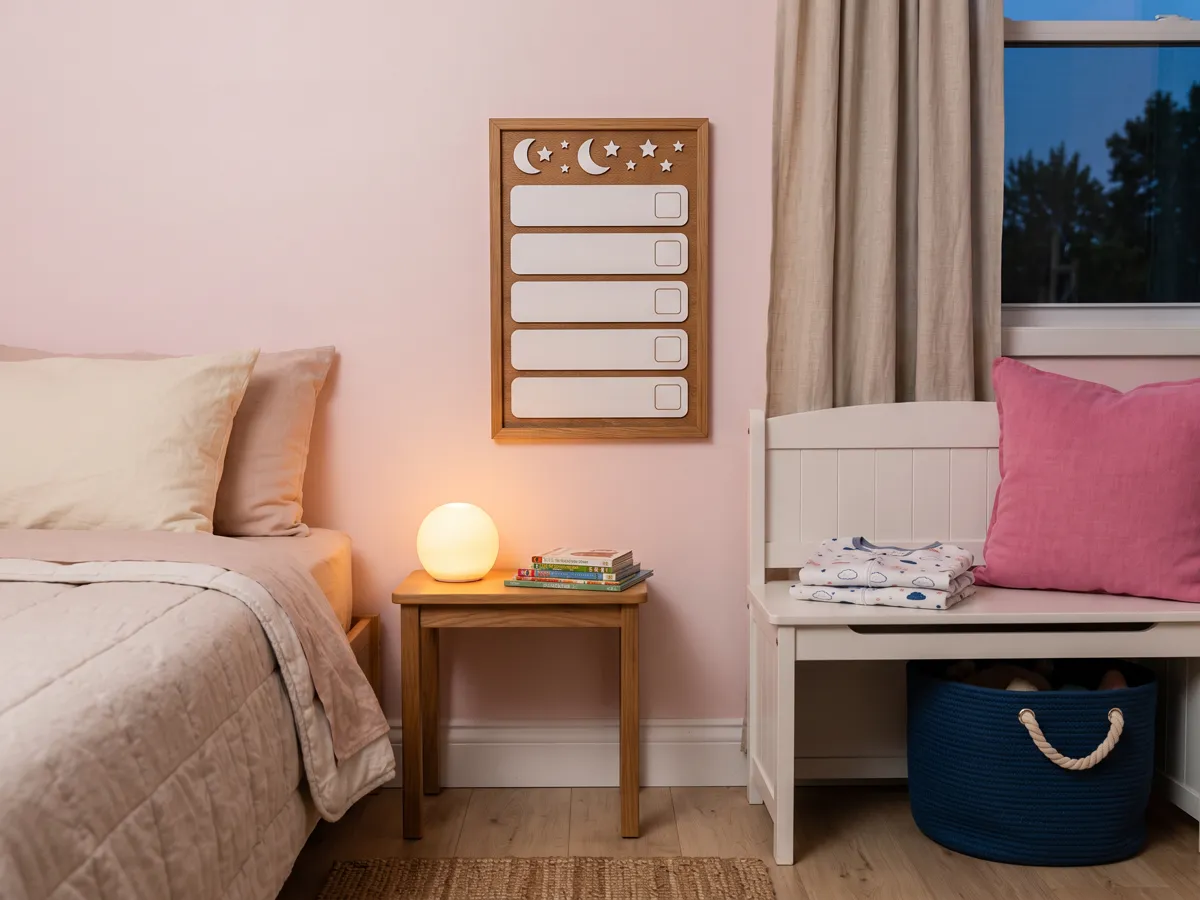
No download needed. Draw five boxes on one sheet and label them with the steps above: teeth, tidy, wash, story, lights-out. Your child marks each finished box with a crayon star. Under-4s do better with a picture per box — a toothbrush, a block, a duck, a book, a moon. Tape it at their eye level by the bed, not yours.
The chart works because the order never changes. Protect the order for two full weeks before judging it. Night three is always worse than night one — and night ten is why you kept going.
When it slips: stalling and night visits
Stalling is normal at this age, not defiance. Answer the extra request once, kindly, then repeat the ritual phrase and leave. For night visits, walk your child back with as few words as possible: same phrase, covers up, out. Big feelings at bedtime deserve comfort, not a lecture. Save the talk for breakfast, when everyone can hear it.
This is a routine guide, not medical advice. Snoring, gasping, long struggles to fall asleep most nights, or anything that worries you belongs with your pediatrician, not a chart.
Save this for tonight
Pin the chart steps that fit your child's age, then come back tonight when the crayons are out — the Parenting Tips & Routines collection holds the morning checklist that pairs with this one.
Pediatric screen-time guidance that protects bedtime: AAP guidance on media and children.